
Kicking off with How interest rates affect loans, this opening paragraph is designed to captivate and engage the readers, setting the tone casual formal language style that unfolds with each word.
Understanding how interest rates impact loans is crucial for making informed financial decisions. From influencing monthly payments to shaping borrowing choices, these rates play a significant role in the loan market. Let’s delve into the intricate relationship between interest rates and loans, exploring how fluctuations can affect your financial health.
INTEREST RATES
Interest rates refer to the cost of borrowing money, typically expressed as a percentage of the total loan amount. It is the compensation that a lender receives for taking on the risk of lending money to borrowers.
How Interest Rates are Determined
Interest rates are determined by various factors, including the level of inflation, the demand for credit, the supply of money, and the monetary policy set by central banks. Central banks play a crucial role in setting short-term interest rates through their monetary policy decisions.
- The Federal Reserve in the United States, for example, influences short-term interest rates through its federal funds rate, which is the rate at which banks lend to each other overnight.
- Long-term interest rates, on the other hand, are influenced by factors such as inflation expectations, economic growth prospects, and global economic conditions.
The Impact of Interest Rates on the Economy
Interest rates have a significant impact on the economy in various ways:
- Consumer Spending: Higher interest rates can discourage consumers from borrowing money for purchases, leading to a decrease in consumer spending.
- Business Investment: Businesses may be less inclined to invest in new projects or expand operations when interest rates are high, as the cost of borrowing increases.
- Housing Market: Fluctuations in interest rates can affect the housing market, influencing the demand for mortgages and home purchases.
- Exchange Rates: Interest rate differentials between countries can impact exchange rates, affecting international trade and investment flows.
How Interest Rates Affect Loans
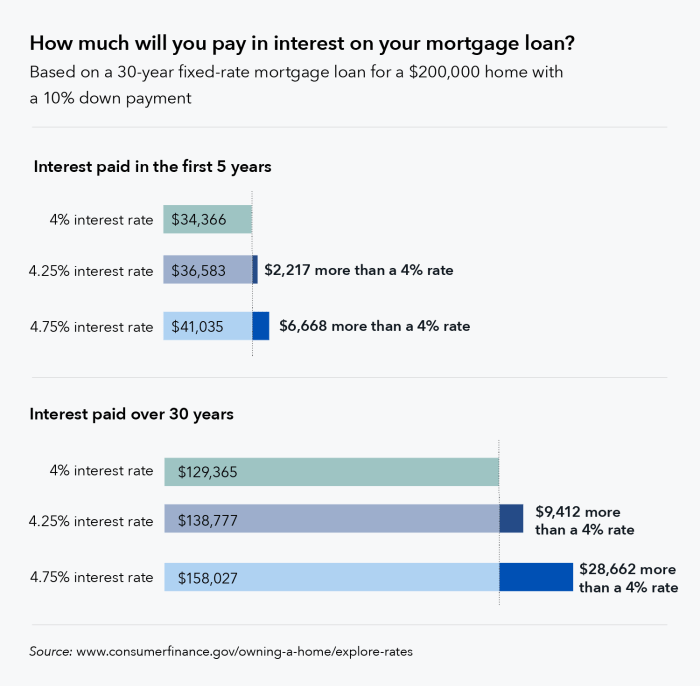
Understanding the impact of interest rates on loans is crucial for borrowers looking to make informed financial decisions.
Relationship Between Interest Rates and Loan Payments
Interest rates play a significant role in determining the total cost of borrowing money. When interest rates are low, borrowers can enjoy lower monthly payments and pay less interest over the life of the loan. On the other hand, high-interest rates result in higher monthly payments and increased overall borrowing costs.
Changes in Interest Rates Influence Borrowing Decisions
Fluctuations in interest rates can have a direct impact on borrowing decisions. When interest rates are low, it may be an opportune time to take out a loan for a major purchase, such as a home or car. Conversely, rising interest rates may discourage borrowing or prompt borrowers to seek out alternative financing options.
Impact of Fluctuating Interest Rates on Different Types of Loans, How interest rates affect loans
- Fixed-Rate Loans: With fixed-rate loans, the interest rate remains constant throughout the life of the loan, offering predictability for borrowers. However, changes in interest rates do not affect the monthly payments on fixed-rate loans.
- Variable-Rate Loans: Variable-rate loans, such as adjustable-rate mortgages, are directly impacted by changes in interest rates. Borrowers may experience fluctuations in their monthly payments as interest rates change, making budgeting more challenging.
- Student Loans: Fluctuating interest rates can impact the total amount repaid on student loans. Borrowers with variable-rate student loans may see their monthly payments increase if interest rates rise, leading to higher overall borrowing costs.
Fixed vs. Variable Interest Rates: How Interest Rates Affect Loans
Fixed and variable interest rates are two common types of interest rates that borrowers encounter when taking out loans. Fixed interest rates remain the same throughout the life of the loan, providing predictability and stability in monthly payments. On the other hand, variable interest rates fluctuate based on market conditions, which can lead to changes in monthly payments.
Pros and Cons of Fixed and Variable Interest Rates
- Fixed Interest Rates:
- Pros:
- Offer stability and predictability in monthly payments.
- Protection against interest rate hikes in the market.
- Cons:
- Initial interest rate may be higher compared to variable rates.
- Borrowers may miss out on potential savings if market rates decrease.
- Pros:
- Variable Interest Rates:
- Pros:
- Potential for lower initial interest rates compared to fixed rates.
- Borrowers can benefit from falling market interest rates.
- Cons:
- Monthly payments can increase if market rates rise.
- Less predictability in monthly payment amounts.
- Pros:
Scenarios for Fixed and Variable Interest Rates
When considering fixed or variable interest rates, it is important to assess individual financial goals and risk tolerance.
- Fixed interest rates are more beneficial for borrowers seeking predictability and stability in monthly payments, especially in a rising interest rate environment.
- Variable interest rates may be advantageous for borrowers who are comfortable with potential fluctuations in monthly payments and want to take advantage of lower initial rates in a declining interest rate market.
Factors Influencing Loan Interest Rates
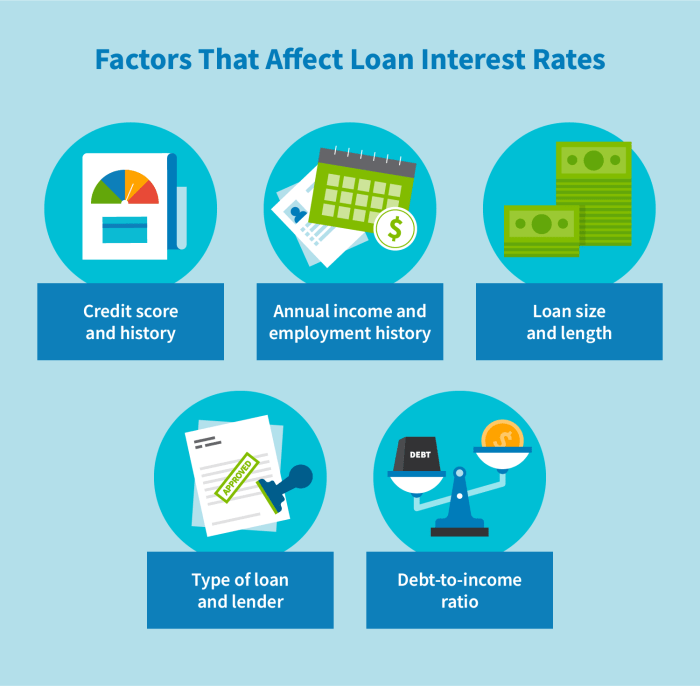
When it comes to determining loan interest rates, several factors come into play that influence the rates offered by lenders. These factors can impact the overall cost of borrowing for individuals seeking different types of loans.
Credit Scores Impact
Credit scores play a crucial role in determining the interest rates on loans. Lenders use credit scores as a measure of an individual’s creditworthiness and financial responsibility. Borrowers with higher credit scores are likely to qualify for lower interest rates, as they are considered less risky to lend money to. On the other hand, individuals with lower credit scores may face higher interest rates or even struggle to qualify for certain loans.
Role of Inflation and Economic Conditions
Inflation and economic conditions also play a significant role in determining loan interest rates. In times of high inflation or economic instability, lenders may increase interest rates to account for the higher level of risk associated with lending money. Conversely, during periods of low inflation and economic growth, interest rates may be lower as lenders try to stimulate borrowing and spending.
Strategies for Managing Loan Interest Rates
When it comes to managing loan interest rates, there are several strategies that borrowers can employ to ensure they are getting the best possible deal. From negotiating better rates to refinancing options, here are some tips to help you navigate the world of loan interest rates.
1. Negotiating Better Interest Rates
One of the most effective ways to manage loan interest rates is by negotiating with lenders. It’s important to shop around and compare offers from different financial institutions to leverage better rates. Highlighting a strong credit history, stable income, and a good debt-to-income ratio can also help in negotiating lower interest rates. Remember, the better your credit profile, the more bargaining power you have.
2. Refinancing Options
If you already have a loan with a high-interest rate, consider refinancing to take advantage of lower rates. Refinancing involves paying off your existing loan with a new loan that has better terms, including a lower interest rate. However, it’s crucial to calculate the costs associated with refinancing to ensure that the savings from lower interest rates outweigh the refinancing expenses.
3. Protecting Yourself from Rising Interest Rates
In a volatile economic environment, it’s essential to protect yourself from rising interest rates. Consider opting for fixed-rate loans instead of variable-rate loans to lock in a stable interest rate for the entire loan term. Fixed-rate loans provide predictability and protection against sudden interest rate hikes, making them a safer option for borrowers concerned about rising rates.
In conclusion, the impact of interest rates on loans is far-reaching, influencing everything from mortgage rates to student loans. By understanding this relationship, borrowers can make smart decisions to optimize their financial well-being and navigate the complex world of lending with confidence.
Common Queries
How do interest rates affect loan payments?
Interest rates directly impact the amount of interest you pay on your loan, affecting your monthly payments. Higher rates mean higher payments.
What is the difference between fixed and variable interest rates on loans?
Fixed interest rates remain constant throughout the loan term, providing stability in payments, while variable rates fluctuate based on market conditions.
Can I negotiate better interest rates on my loans?
Yes, you can negotiate with lenders for better rates based on your creditworthiness and financial situation.


