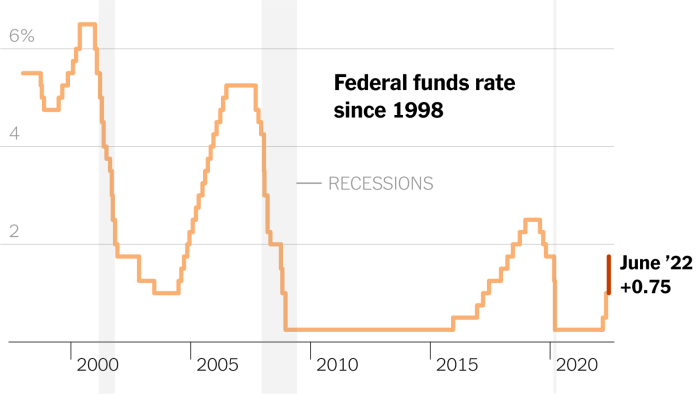
With Federal Reserve interest rate decisions at the forefront, this paragraph opens a window to an engaging exploration of how these decisions shape the economy and financial markets, intertwined with key economic indicators and historical perspectives.
Exploring the profound impact of these decisions will provide valuable insights into the intricate workings of the Federal Reserve and its influence on various sectors.
Federal Reserve Interest Rate Decisions
The Federal Reserve plays a crucial role in setting interest rates in the United States. This monetary policy tool is used to manage inflation, employment levels, and overall economic growth.
Impact on the Economy
When the Federal Reserve decides to raise interest rates, borrowing becomes more expensive for consumers and businesses. This can lead to decreased spending and investment, slowing down economic growth. On the other hand, when the Fed lowers interest rates, borrowing becomes cheaper, stimulating spending and investment, which can boost economic activity.
Factors Influencing Decisions
- The state of the economy: The Federal Reserve looks at key economic indicators such as inflation, employment numbers, and GDP growth to determine whether to raise, lower, or maintain interest rates.
- Global economic conditions: External factors like trade tensions, geopolitical events, or changes in global markets can also influence the Fed’s decision on interest rates.
- Market expectations: The Federal Reserve closely monitors market expectations and adjusts interest rates accordingly to maintain stability and confidence in the economy.
Impact on Financial Markets

When the Federal Reserve makes decisions regarding interest rates, it has a significant impact on various financial markets. Let’s delve into how these decisions affect stock markets, bond yields, and foreign exchange markets.
Stock Markets
Changes in interest rates by the Federal Reserve can have a direct impact on stock markets. Typically, when interest rates are lowered, it becomes cheaper for companies to borrow money for expansion or investment. This can lead to increased spending, higher corporate earnings, and ultimately a positive impact on stock prices. On the other hand, when interest rates are raised, borrowing becomes more expensive, which can dampen corporate profits and lead to a decrease in stock prices.
Bond Yields
The relationship between Federal Reserve decisions and bond yields is crucial. When the Fed raises interest rates, bond prices tend to fall, causing yields to rise. This is because newly issued bonds at higher interest rates become more attractive to investors than existing bonds with lower yields. Conversely, when the Fed cuts rates, bond prices rise, leading to lower yields.
Bond yields also serve as an indicator of market sentiment and economic expectations.
Foreign Exchange Markets
Changes in interest rates can impact foreign exchange markets significantly. Higher interest rates in a country can attract foreign capital as investors seek higher returns. This increased demand for the country’s currency can lead to appreciation. Conversely, lower interest rates can result in capital outflows as investors look for better returns elsewhere, causing the country’s currency to depreciate. Exchange rates play a crucial role in international trade and investment decisions, making them sensitive to interest rate changes by the Federal Reserve.
Economic Indicators
The Federal Reserve considers various key economic indicators when making interest rate decisions. These indicators provide insight into the overall health of the economy and help the Fed determine the appropriate course of action.
Employment Data
Employment data, such as the unemployment rate and nonfarm payroll numbers, plays a crucial role in the Federal Reserve’s decision-making process. A strong job market with low unemployment rates indicates a healthy economy with increased consumer spending and overall growth. In such cases, the Fed may consider raising interest rates to prevent overheating and inflation.
- Unemployment Rate: The unemployment rate is a key indicator of economic health. A low unemployment rate signifies a robust job market and can lead to higher inflation if not managed properly.
- Nonfarm Payrolls: The number of nonfarm payrolls reflects the overall employment situation in the country. A growing number of payrolls suggests a thriving economy, potentially leading to inflation.
Inflation Rates
Inflation rates also play a significant role in the Federal Reserve’s interest rate decisions. The Fed aims to maintain stable prices and keep inflation in check to support sustainable economic growth. When inflation rates rise above the Fed’s target, they may increase interest rates to curb excessive spending and price growth.
High inflation can erode purchasing power, reduce consumer confidence, and destabilize the economy.
- Consumer Price Index (CPI): The CPI measures the average change in prices paid by consumers for goods and services. A high CPI indicates rising inflation, prompting the Fed to consider raising interest rates.
- Producer Price Index (PPI): The PPI tracks changes in prices received by producers for their goods and services. An increase in PPI can signal future inflationary pressures, influencing the Fed’s monetary policy decisions.
Historical Analysis: Federal Reserve Interest Rate Decisions

When looking at the history of significant Federal Reserve interest rate decisions, it is crucial to note the impact these decisions have had on the economy over time. Rate hikes and rate cuts by the Federal Reserve have played a pivotal role in shaping economic trends and conditions.
Comparison of Rate Hikes vs. Rate Cuts, Federal Reserve interest rate decisions
Rate hikes and rate cuts by the Federal Reserve have differing impacts on the economy. Rate hikes are typically implemented to curb inflation and prevent an overheating economy, but they can also slow down economic growth and increase borrowing costs for consumers and businesses. On the other hand, rate cuts are used to stimulate economic activity, boost consumer spending, and encourage borrowing and investment.
However, excessive rate cuts can lead to inflation and asset bubbles.
Federal Reserve’s Response to Economic Crises
During economic crises, the Federal Reserve often implements aggressive interest rate cuts to provide liquidity to financial markets, lower borrowing costs, and stimulate economic growth. These rate cuts are aimed at restoring confidence in the economy and preventing a prolonged recession. The Federal Reserve’s response to economic crises has a direct impact on interest rates, as they adjust monetary policy to address the specific challenges facing the economy.
In conclusion, Federal Reserve interest rate decisions play a pivotal role in shaping the economic landscape, with far-reaching effects on financial markets and economic indicators. Understanding the nuances of these decisions is crucial for gauging their impact on the economy and predicting future trends.
Question Bank
What factors influence the Federal Reserve’s decision on interest rates?
The Federal Reserve considers various factors such as inflation rates, employment data, and economic growth when making decisions on interest rates.
How do Federal Reserve interest rate decisions impact stock markets?
Changes in interest rates set by the Federal Reserve can influence stock market performance, affecting investor sentiment and company valuations.
What historical significance do Federal Reserve interest rate decisions hold?
Significant Federal Reserve interest rate decisions in history have shaped economic policies, influenced market trends, and played a crucial role in responding to economic crises.


