
Auto loan interest rates today are a crucial aspect of borrowing for a vehicle. Understanding how these rates are determined and what factors influence them can significantly impact your financial decisions. Let’s delve into the world of auto loan interest rates to gain a comprehensive understanding of this essential topic.
In this discussion, we will explore the current average rates in the market, the impact of different credit scores, and shed light on the intricacies of interest rates in the realm of auto loans.
Auto Loan Interest Rates Today
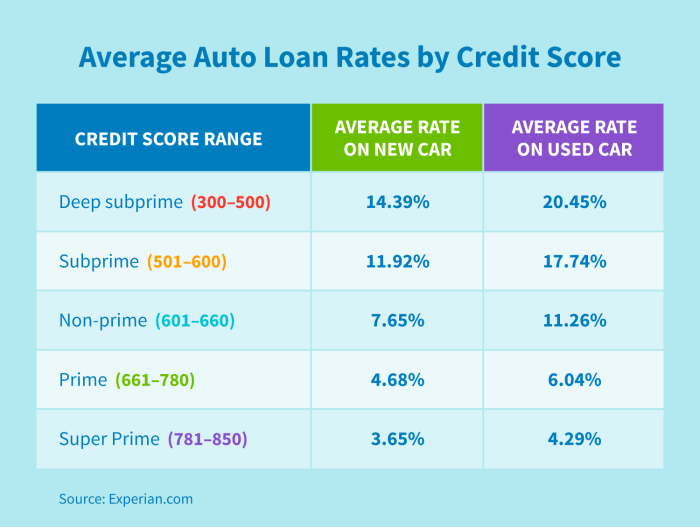
When it comes to auto loans, interest rates play a crucial role in determining the overall cost of borrowing money to purchase a vehicle. These rates are essentially the percentage of the principal amount that lenders charge borrowers for the privilege of borrowing the money.
Factors Influencing Auto Loan Interest Rates Today
Several factors can influence auto loan interest rates in the current market:
- Economic conditions, including the state of the economy and the Federal Reserve’s monetary policy.
- The borrower’s credit score and credit history.
- The loan term and amount being borrowed.
- The type of vehicle being financed.
Current Average Auto Loan Interest Rates
As of [current date], the average auto loan interest rates in the market are as follows:
| Loan Term | Average Interest Rate |
|---|---|
| 48 months | 3.45% |
| 60 months | 3.65% |
| 72 months | 3.85% |
Impact of Credit Scores on Auto Loan Interest Rates
Credit scores play a significant role in determining the interest rate a borrower will receive. Here are some examples of how different credit scores can impact auto loan interest rates:
- Excellent credit score (above 800): 2.5% interest rate
- Good credit score (700-799): 4.5% interest rate
- Fair credit score (600-699): 7% interest rate
- Poor credit score (below 600): 10% interest rate
Understanding Interest Rates
Interest rates play a crucial role in the world of finance, impacting borrowing and saving decisions. They represent the cost of borrowing money or the return on savings and investments.
Fixed vs. Variable Interest Rates
Fixed interest rates remain the same throughout the loan term, providing predictability in monthly payments. On the other hand, variable interest rates can fluctuate based on market conditions, potentially leading to changing monthly payments.
APR vs. Interest Rate
The Annual Percentage Rate (APR) includes not only the interest rate but also additional fees and charges associated with the loan. It provides a more comprehensive picture of the total cost of borrowing compared to just the interest rate.
Inflation and Economic Conditions
Inflation and economic conditions can influence interest rates. When inflation is high, central banks may raise interest rates to control it. In times of economic downturn, interest rates may be lowered to stimulate borrowing and spending.
In conclusion, being well-informed about auto loan interest rates today is key to making smart financial choices when purchasing a vehicle. By grasping the nuances of these rates and how they can vary based on various factors, you are better equipped to navigate the world of auto financing with confidence.
FAQ Summary
What determines auto loan interest rates?
Auto loan interest rates are determined based on factors such as credit score, loan term, and the current economic conditions.
How do different credit scores impact auto loan interest rates?
Generally, individuals with higher credit scores receive lower interest rates on auto loans compared to those with lower credit scores.
What is the difference between APR and interest rate in auto loans?
The interest rate on an auto loan is the percentage of the loan amount that you pay as interest, while APR includes the interest rate plus any additional fees associated with the loan.
Do inflation and economic conditions affect auto loan interest rates?
Yes, inflation and economic conditions can impact auto loan interest rates as lenders adjust rates based on market conditions.


