
Central bank interest rate changes play a crucial role in shaping economic landscapes. From influencing inflation rates to impacting consumer spending, these changes have far-reaching effects. Dive into the intricate world of central bank interest rate adjustments with us.
Central Bank Interest Rate Changes
Central bank interest rate changes play a crucial role in shaping the overall economy. When central banks adjust interest rates, it impacts borrowing costs, investment decisions, and ultimately influences economic growth.
Impact on Inflation Rates
One significant way central bank interest rate changes affect the economy is through inflation rates. When central banks increase interest rates, borrowing becomes more expensive. This leads to lower consumer spending and reduced demand for goods and services. As a result, businesses may lower prices to stimulate demand, leading to lower inflation rates. On the other hand, if central banks decrease interest rates, borrowing becomes cheaper, encouraging consumer spending and increasing demand, which can lead to higher inflation rates.
Relationship with Consumer Spending
The relationship between central bank interest rate changes and consumer spending is closely intertwined. When central banks lower interest rates, borrowing costs decrease, making it more affordable for consumers to take out loans for big-ticket items like homes or cars. This increase in consumer spending can boost economic activity and drive growth. Conversely, when interest rates rise, borrowing costs go up, leading to a decrease in consumer spending as individuals are less likely to take on new debt.
This can result in a slowdown in economic growth.
Factors Influencing Central Bank Interest Rate Changes
Central banks consider various key economic indicators when making decisions to change interest rates. These indicators help central banks gauge the overall health of the economy and determine the appropriate monetary policy actions.
Key Economic Indicators Considered by Central Banks
- Gross Domestic Product (GDP): Central banks closely monitor GDP growth rates as it reflects the overall economic performance of a country.
- Inflation Rate: Controlling inflation is a primary goal of central banks, and they adjust interest rates to keep inflation within a target range.
- Unemployment Rate: High unemployment rates indicate a weaker economy, prompting central banks to lower interest rates to stimulate economic activity.
- Consumer Spending: Consumer spending patterns provide insights into the demand for goods and services, influencing interest rate decisions.
Global Economic Events Impact
Global economic events, such as trade wars, financial crises, or geopolitical tensions, can have a significant impact on central bank decisions regarding interest rates. These events can create uncertainty in financial markets, leading central banks to adjust interest rates to stabilize the economy.
Employment Data Influence
Employment data, including the unemployment rate and job creation figures, play a crucial role in central bank interest rate decisions. A strong labor market with low unemployment rates suggests a healthy economy, potentially prompting central banks to consider raising interest rates to prevent overheating.
Effects of Central Bank Interest Rate Changes on Financial Markets
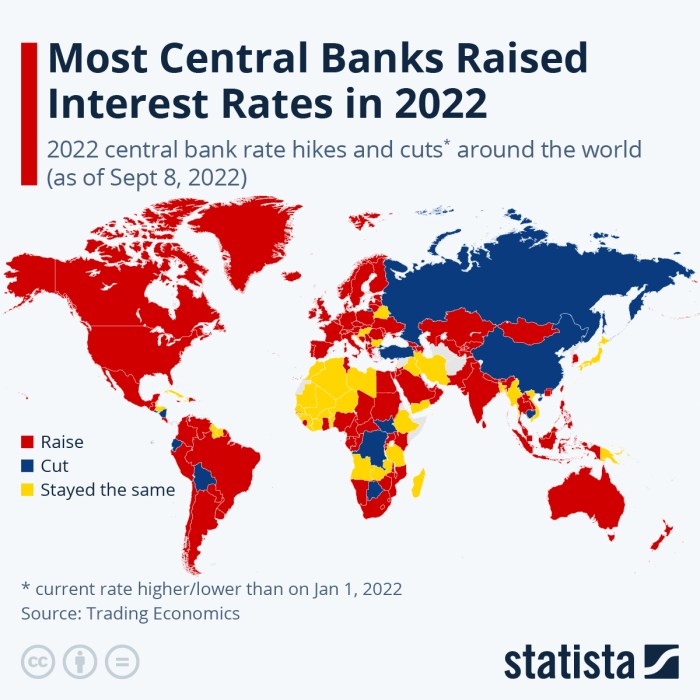
When central banks make changes to their interest rates, it has profound effects on various financial markets. Let’s explore how these changes impact stock markets, bond yields, and foreign exchange markets.
Impact on Stock Markets
Changes in central bank interest rates can significantly influence stock markets. When interest rates are lowered, borrowing costs decrease, making it cheaper for businesses to borrow money for expansion and investment. This can lead to an increase in corporate profits and stock prices. On the other hand, when interest rates are raised, borrowing becomes more expensive, potentially slowing down economic growth and causing stock prices to decline.
Impact on Bond Yields, Central bank interest rate changes
Central bank interest rate changes also have a direct impact on bond yields. When central banks raise interest rates, bond prices tend to fall as investors seek higher yields on new bonds issued at the higher rates. Conversely, when interest rates are lowered, bond prices tend to rise, as existing bonds with higher yields become more attractive.
Relationship with Foreign Exchange Markets
Central bank interest rate changes can affect foreign exchange markets in several ways. Higher interest rates can attract foreign investment, increasing demand for the domestic currency and causing it to appreciate. Conversely, lower interest rates can lead to capital outflows as investors seek higher returns elsewhere, weakening the domestic currency. Changes in exchange rates can impact import/export businesses, international investments, and overall economic competitiveness.
Understanding Interest Rates: Central Bank Interest Rate Changes

Interest rates play a crucial role in the economy, impacting borrowing, lending, and investment decisions. Let’s delve into what interest rates are, how they are determined, and their significance in financial transactions.Interest rates represent the cost of borrowing money or the return on investment for lenders. They are typically expressed as a percentage and can vary based on a variety of factors.
Nominal Interest Rates vs. Real Interest Rates
- Nominal Interest Rates: Nominal rates are the stated rates without adjusting for inflation. They reflect the actual interest payments made on a loan or earned on an investment.
- Real Interest Rates: Real rates take inflation into account, providing a more accurate measure of the true cost of borrowing or the actual return on investment.
Role of Interest Rates in Borrowing and Lending
- Cost of Borrowing: Higher interest rates mean higher borrowing costs for consumers and businesses, potentially reducing borrowing and spending.
- Return on Savings: Higher interest rates can also lead to higher returns on savings and investments, incentivizing saving and investment activities.
- Impact on Economic Activity: Changes in interest rates can influence consumer spending, business investments, and overall economic growth.
As we conclude our exploration of central bank interest rate changes, it becomes evident that these adjustments are not mere numbers on a screen. They hold the power to sway financial markets, influence borrowing decisions, and shape the overall economic climate.
Question & Answer Hub
How do central bank interest rate changes impact inflation rates?
Central bank interest rate changes can influence inflation rates by affecting borrowing costs, which in turn impact consumer spending and demand.
What are nominal interest rates and real interest rates?
Nominal interest rates are the stated rates without adjusting for inflation, while real interest rates are adjusted for inflation to reflect the true cost of borrowing or return on investment.
How do changes in central bank interest rates affect stock markets?
Changes in central bank interest rates can impact stock markets by influencing borrowing costs for companies and altering investor sentiment based on perceived economic conditions.


