
Impact of interest rates on mortgages sets the stage for this enthralling narrative, offering readers a glimpse into a story that is rich in detail and brimming with originality. Explore how changes in interest rates affect mortgage payments, the relationship between interest rates and mortgage affordability, and the influence of interest rate fluctuations on the housing market.
Delve into the comparison of fixed-rate and variable-rate mortgages, how economic factors impact mortgage interest rates, and the role of the Federal Reserve in influencing interest rates. Discover the intricacies of global economic events and their effect on mortgage interest rates.
INTEREST RATES: Impact Of Interest Rates On Mortgages
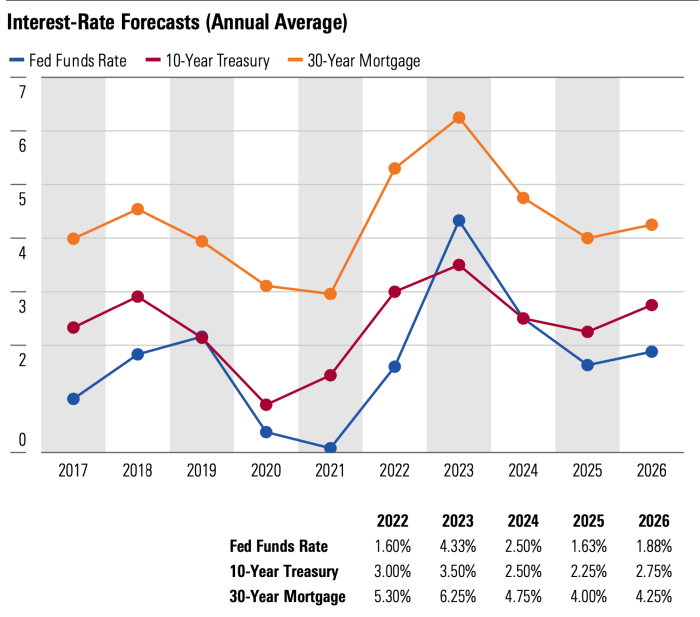
Interest rates play a crucial role in the mortgage industry, affecting the overall cost of borrowing for homeowners. These rates represent the cost of borrowing money from a lender to purchase a home.In the mortgage industry, interest rates are determined based on various factors, including the current economic conditions, the borrower’s credit score, the loan amount, and the term of the loan.
Lenders also take into account the level of risk associated with the borrower’s ability to repay the loan.
Determining Interest Rates, Impact of interest rates on mortgages
Interest rates for mortgages typically fall within a range depending on market conditions and individual borrower factors. As of recent data, the range for mortgage interest rates can vary from around 2.5% to 5%, with fixed-rate mortgages often having slightly higher rates than adjustable-rate mortgages.
- Factors influencing interest rates include inflation rates, the Federal Reserve’s monetary policy, and the overall health of the economy.
- Borrowers with higher credit scores and lower debt-to-income ratios are likely to secure lower interest rates.
- The type of mortgage chosen, such as a conventional loan, FHA loan, or VA loan, can also impact the interest rate offered.
IMPACT OF INTEREST RATES ON MORTGAGES
Interest rates play a significant role in determining the overall cost of borrowing money for a mortgage. When interest rates fluctuate, it can have a direct impact on mortgage payments, affordability, and the housing market as a whole.Changes in interest rates directly affect mortgage payments. As interest rates rise, the cost of borrowing increases, resulting in higher monthly mortgage payments for homeowners.
Conversely, when interest rates fall, homeowners may see a decrease in their monthly mortgage payments. This relationship between interest rates and mortgage payments is crucial for homeowners to consider when budgeting for housing expenses.The relationship between interest rates and the affordability of mortgages is closely intertwined. Higher interest rates can make it more challenging for potential homebuyers to qualify for a mortgage, as the higher cost of borrowing reduces their purchasing power.
On the other hand, lower interest rates can make homeownership more accessible and affordable for a broader range of individuals. Understanding how interest rates impact affordability is essential for both potential homebuyers and current homeowners.Interest rate fluctuations can also influence the overall housing market. When interest rates are low, it often stimulates demand for housing, as more individuals are encouraged to buy homes due to lower borrowing costs.
This increased demand can drive up home prices and lead to a competitive housing market. Conversely, when interest rates are high, it can dampen demand for housing, potentially causing home prices to stabilize or even decrease in certain markets. Monitoring interest rate trends is crucial for those involved in the real estate market, as it can provide insights into the direction of housing prices and market activity.
FIXED VS. VARIABLE RATES
When it comes to mortgages, borrowers have the option to choose between fixed-rate mortgages and variable-rate mortgages. Each type has its own set of advantages and disadvantages, especially when it comes to how they are impacted by changes in interest rates.Fixed-rate mortgages have a set interest rate that remains constant throughout the term of the loan. This means that regardless of fluctuations in the market, the borrower’s monthly payments will remain the same.
On the other hand, variable-rate mortgages have interest rates that can fluctuate based on changes in a benchmark interest rate, such as the prime rate.
Fixed-Rate Mortgages
Fixed-rate mortgages provide stability and predictability for borrowers, as they know exactly how much they need to pay each month. This can be beneficial in times of rising interest rates, as borrowers are protected from sudden increases in their mortgage payments. However, in a falling interest rate environment, borrowers with fixed-rate mortgages may miss out on potential savings from lower rates.
Variable-Rate Mortgages
Variable-rate mortgages typically start with lower interest rates compared to fixed-rate mortgages, making them attractive to borrowers looking for initial cost savings. However, the risk lies in potential rate increases, which can lead to higher monthly payments. Borrowers need to be prepared for fluctuations in interest rates and have a strategy in place to manage potential increases in mortgage payments.Overall, the choice between fixed-rate and variable-rate mortgages depends on individual financial goals, risk tolerance, and market conditions.
Borrowers should carefully consider their options and consult with a financial advisor to determine the most suitable type of mortgage based on their unique circumstances.
ECONOMIC FACTORS
The mortgage interest rates are heavily influenced by various economic factors that play a significant role in shaping the lending landscape. Understanding these key economic indicators is crucial for borrowers looking to secure a mortgage.
Key Economic Indicators
- The Gross Domestic Product (GDP): A strong GDP growth usually leads to higher inflation, prompting the Federal Reserve to raise interest rates to control inflation. This, in turn, affects mortgage rates.
- Unemployment Rate: High unemployment rates can signal a weak economy, causing the Federal Reserve to lower interest rates to stimulate economic activity. Lower rates can make mortgages more affordable for borrowers.
- Inflation Rate: Inflation erodes the purchasing power of the currency, leading to higher interest rates to combat rising prices. Mortgage rates tend to increase in environments with high inflation.
- Housing Market Trends: The state of the housing market, including home sales, prices, and inventory levels, can impact mortgage rates. Strong demand for housing can lead to higher mortgage rates.
Federal Reserve’s Influence
The Federal Reserve plays a crucial role in determining short-term interest rates through its monetary policy decisions. By adjusting the federal funds rate, the Fed influences borrowing costs for banks, which ultimately impacts mortgage rates for consumers. For example, when the Fed raises rates to curb inflation, mortgage rates tend to rise as well.
Global Economic Events
Global economic events can also have a significant impact on mortgage interest rates. Factors such as geopolitical tensions, trade agreements, and economic crises in other countries can cause fluctuations in the bond market, which directly affects mortgage rates. Investors often turn to safer assets like bonds during uncertain times, leading to lower mortgage rates as bond prices rise.
In conclusion, the impact of interest rates on mortgages is a complex yet crucial aspect of the housing market. Understanding these dynamics can help individuals make informed decisions when navigating the world of mortgages.
Detailed FAQs
How do interest rates affect mortgage payments?
Interest rates directly impact mortgage payments, with higher rates leading to higher monthly payments and vice versa.
What economic indicators influence mortgage interest rates?
Key economic indicators such as inflation rates, employment levels, and GDP growth can all influence mortgage interest rates.
What is the difference between fixed-rate and variable-rate mortgages in terms of interest rate changes?
Fixed-rate mortgages have stable interest rates throughout the loan term, while variable-rate mortgages have rates that can fluctuate based on market conditions.


