
Kicking off with Mortgage refinance interest rates, this topic delves into the intricacies of how these rates work, what factors affect them, and how to find the best deal. Whether you’re a first-time homebuyer or a seasoned homeowner looking to refinance, understanding these rates is crucial for making informed financial decisions.
Understanding Mortgage Refinance Interest Rates
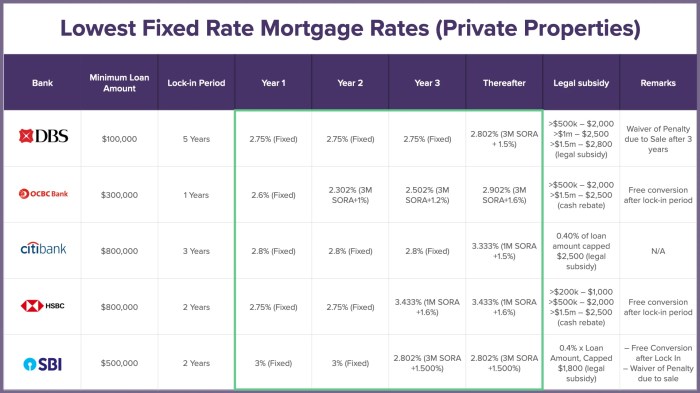
When considering mortgage refinance, it’s crucial to understand how interest rates play a significant role in determining the overall cost of your loan. Mortgage refinance interest rates refer to the percentage charged by the lender for borrowing the funds needed to refinance your existing mortgage.
Calculation of Mortgage Refinance Interest Rates
Mortgage refinance interest rates are typically calculated based on various factors, including:
- Your credit score: A higher credit score often leads to lower interest rates as it indicates lower risk for the lender.
- Economic conditions: The overall economic climate, inflation rates, and market conditions can influence interest rates.
- Loan term: Shorter loan terms usually come with lower interest rates compared to longer terms.
- Type of interest rate: Fixed-rate mortgages have stable interest rates, while adjustable-rate mortgages can fluctuate based on market conditions.
Factors Influencing Mortgage Refinance Interest Rates
Several factors can influence mortgage refinance interest rates, such as:
- Market conditions: Fluctuations in the economy and the housing market can impact interest rates.
- Loan-to-value ratio: The ratio between the loan amount and the value of the property can affect the interest rate offered.
- Debt-to-income ratio: Lenders consider your debt-to-income ratio when determining the interest rate, as it reflects your ability to repay the loan.
- Loan amount: The amount you wish to refinance can also impact the interest rate offered by lenders.
Types of Mortgage Refinance Interest Rates
When considering mortgage refinance, borrowers have the option to choose between fixed-rate mortgages and adjustable-rate mortgages. Each type of interest rate has its own characteristics and considerations to keep in mind.
Fixed-Rate Mortgages vs. Adjustable-Rate Mortgages
Fixed-rate mortgages have interest rates that remain constant throughout the life of the loan, providing predictability and stability for borrowers. On the other hand, adjustable-rate mortgages (ARMs) have interest rates that can fluctuate based on market conditions, offering the potential for lower initial rates but also the risk of rates increasing over time.
Hybrid ARM Interest Rates
Hybrid ARMs combine elements of both fixed-rate and adjustable-rate mortgages. These loans typically have an initial fixed-rate period, after which the interest rate adjusts periodically based on specific terms Artikeld in the loan agreement. For example, a 5/1 ARM has a fixed rate for the first five years, followed by annual adjustments.
Pros and Cons
Fixed-rate mortgages provide stability and protection against rising interest rates, making budgeting easier for borrowers. On the other hand, adjustable-rate mortgages offer lower initial rates and the potential for savings if rates remain low or decrease. However, they also come with the risk of rates increasing in the future, leading to higher monthly payments.Overall, the choice between fixed-rate and adjustable-rate mortgages depends on individual financial goals, risk tolerance, and the current market conditions.
It’s essential for borrowers to carefully consider their options and consult with a financial advisor to determine the most suitable type of mortgage refinance interest rate for their needs.
Shopping for Mortgage Refinance Interest Rates
When looking to refinance your mortgage, it’s essential to shop around for the best interest rates to ensure you get the most favorable terms for your loan. Here are some tips on how to navigate the process:
Comparing APR vs. Interest Rates
When comparing mortgage refinance interest rates, it’s crucial to look at both the interest rate and the Annual Percentage Rate (APR). While the interest rate reflects the cost of borrowing the principal loan amount, the APR includes the interest rate plus any additional fees or costs associated with the loan. This allows you to have a more comprehensive understanding of the total cost of the loan and helps you make a more informed decision.
- Always compare the APR along with the interest rate to get a complete picture of the loan terms.
- A lower interest rate may seem attractive, but a higher APR could indicate additional fees that make the loan more expensive in the long run.
- Consider how long you plan to stay in your home and calculate the total cost of each loan option over that period to determine the most cost-effective choice.
The Role of Credit Scores, Mortgage refinance interest rates
Credit scores play a significant role in determining the interest rates you qualify for when refinancing your mortgage. Lenders use your credit score to assess your creditworthiness and determine the risk of lending to you. The higher your credit score, the more likely you are to qualify for lower interest rates. Here’s how credit scores can impact your mortgage refinance interest rates:
- Aim to improve your credit score before applying for a refinance to qualify for better interest rates.
- Check your credit report for any errors and address them to ensure an accurate representation of your credit history.
- Consider ways to boost your credit score, such as paying down debt, making payments on time, and avoiding opening new lines of credit before applying for a refinance.
Trends in Mortgage Refinance Interest Rates
Understanding the current trends in mortgage refinance interest rates is crucial for homeowners considering refinancing their mortgages. These rates are not static and can fluctuate based on various economic and geopolitical factors.
Impact of Economic Factors
Economic factors play a significant role in determining mortgage refinance interest rates. Factors such as inflation, unemployment rates, and overall economic growth can influence these rates. For example, during times of economic uncertainty, lenders may increase interest rates to mitigate risks, making refinancing more expensive for borrowers.
Geopolitical Events Influence
Geopolitical events, such as trade wars, political instability, or global conflicts, can also impact mortgage refinance interest rates. These events can create volatility in financial markets, leading to fluctuations in interest rates. For instance, a geopolitical crisis can cause investors to seek safe-haven assets, resulting in lower mortgage rates.
In conclusion, navigating the realm of mortgage refinance interest rates requires careful consideration of various factors. By staying informed and comparing different options, you can secure a favorable rate that aligns with your financial goals.
Popular Questions
What factors influence mortgage refinance interest rates?
Factors such as credit score, economic conditions, and the type of loan can impact mortgage refinance interest rates.
How can I shop around for the best mortgage refinance interest rates?
It’s essential to compare offers from multiple lenders, consider different loan terms, and pay attention to both APR and interest rates.
What are hybrid ARM interest rates?
Hybrid ARM interest rates are a mix of fixed and adjustable rates, typically starting as fixed for a certain period before adjusting periodically.


