
Student loan interest rate changes can have a significant impact on borrowers, affecting repayment amounts and financial decisions. Let’s delve into the factors influencing these changes and compare fixed and variable rates for a comprehensive understanding.
Student Loan Interest Rate Changes
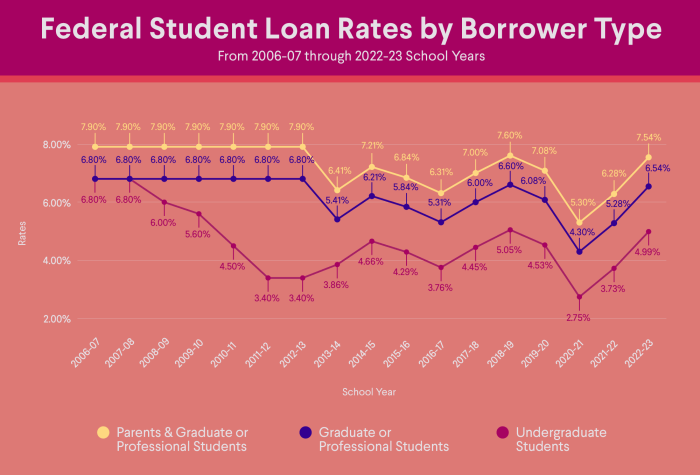
Student loan interest rate changes can have a significant impact on borrowers, affecting the total amount they will need to repay over time. These changes can influence the monthly payments, the total interest paid, and the overall cost of the loan.
Impact on Borrowers
- Higher interest rates result in increased monthly payments, making it harder for borrowers to manage their finances.
- Lower interest rates can lead to lower monthly payments, allowing borrowers to save money or pay off the loan faster.
- Changes in interest rates can affect the total amount of interest paid over the life of the loan, impacting the overall cost for borrowers.
Factors Influencing Changes
- Economic conditions, such as inflation and the federal funds rate, can influence changes in student loan interest rates.
- Lender policies and regulations can also impact interest rate adjustments for student loans.
- Market trends and competition among lenders can lead to fluctuations in student loan interest rates.
Fixed vs. Variable Interest Rates
Fixed interest rates remain the same throughout the life of the loan, providing borrowers with predictable monthly payments. On the other hand, variable interest rates can fluctuate based on market conditions, potentially leading to lower initial rates but higher payments in the future.
Interest Rates
Interest rates are the cost of borrowing money or the return on investment for lending money. They are expressed as a percentage and play a crucial role in the financial market. Understanding how interest rates work is essential for making informed decisions about borrowing, saving, and investing.
Simple vs. Compound Interest Rates
Simple interest is calculated only on the principal amount borrowed or invested, while compound interest includes the interest earned on both the principal and any previously earned interest. Compound interest can lead to higher returns over time due to the effect of compounding.
- Simple Interest: Interest = Principal x Rate x Time
- Compound Interest: A = P(1 + r/n)^(nt)
-P (where A is the amount, P is the principal, r is the annual interest rate, n is the number of times interest is compounded per year, and t is the time in years)
Determining Interest Rates
Interest rates in the financial market are influenced by various factors such as inflation, economic conditions, central bank policies, and market demand. The central bank sets the benchmark interest rate, which affects all other interest rates in the economy. Lenders then adjust their rates based on this benchmark rate and other risk factors.
Changes in interest rates by the central bank can have a ripple effect on the economy, impacting borrowing costs, spending habits, and overall economic growth.
Impact of Interest Rate Changes, Student loan interest rate changes
Changes in interest rates can significantly impact borrowing and saving decisions. For example, when interest rates rise, borrowing becomes more expensive, leading to lower consumer spending and investment. On the other hand, higher interest rates can benefit savers by providing better returns on their savings accounts or investments.
- Example 1: A rise in mortgage interest rates can make buying a home more expensive, leading to a decrease in the demand for real estate.
- Example 2: Lower interest rates on savings accounts can reduce the incentive to save money, as the returns are minimal.
In conclusion, student loan interest rate changes play a crucial role in borrowers’ financial situations, highlighting the importance of staying informed and making sound decisions.
Clarifying Questions
How do student loan interest rate changes impact borrowers?
Student loan interest rate changes can affect the total amount borrowers repay over time, influencing their overall financial burden.
What factors influence changes in student loan interest rates?
Factors such as economic conditions, government policies, and lender decisions can all contribute to changes in student loan interest rates.
What is the difference between fixed and variable student loan interest rates?
Fixed rates remain constant throughout the loan term, providing predictability, while variable rates can fluctuate based on market conditions, potentially resulting in lower or higher payments.


