
Beginning with Federal Reserve interest rate updates, the narrative unfolds in a compelling and distinctive manner, drawing readers into a story that promises to be both engaging and uniquely memorable.
The Federal Reserve plays a crucial role in shaping the economy through interest rate adjustments, impacting borrowing, saving behaviors, and inflation rates. Understanding these updates is essential to grasp the economic landscape.
Federal Reserve Interest Rate Updates
The Federal Reserve plays a crucial role in the economy by setting interest rates to achieve its dual mandate of promoting maximum employment and stable prices. These interest rate decisions have a significant impact on financial markets, borrowing costs, and overall economic activity.
Factors Influencing Federal Reserve Decisions
- Economic Data: The Federal Reserve closely monitors data on employment, inflation, GDP growth, and other key economic indicators to assess the health of the economy.
- Market Expectations: The Fed considers market expectations and investor sentiment, which can influence its decisions on interest rate adjustments.
- Global Economic Conditions: International factors such as trade tensions, geopolitical events, and global economic trends also play a role in shaping the Fed’s policy decisions.
Potential Impact on the Economy
- Monetary Policy Transmission: Changes in interest rates affect borrowing costs for consumers and businesses, influencing spending, investment, and overall economic activity.
- Financial Markets: Federal Reserve interest rate updates can lead to volatility in financial markets as investors adjust their strategies based on the new policy stance.
- Inflation and Employment: The Fed’s interest rate decisions can impact inflation expectations and labor market dynamics, shaping the overall trajectory of the economy.
Importance of Interest Rates
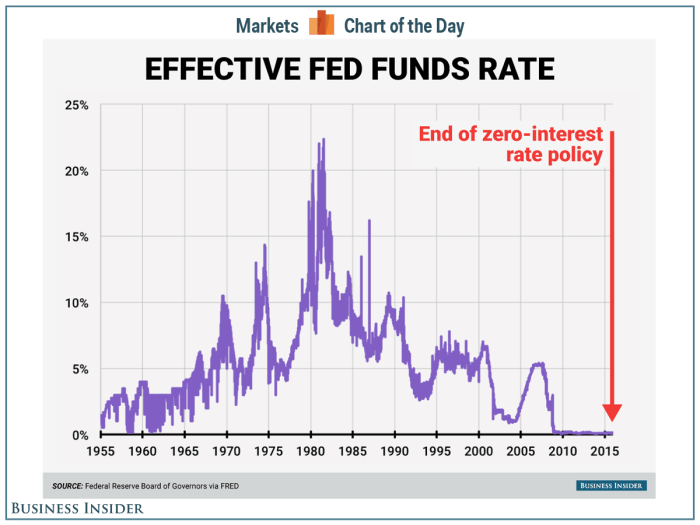
Interest rates play a crucial role in shaping the borrowing and saving behaviors of consumers and businesses. When interest rates are low, borrowing becomes more affordable, leading to increased spending and investment. Conversely, high interest rates can discourage borrowing and encourage saving.Changes in interest rates can have a significant impact on different sectors of the economy. For example, in the housing market, lower interest rates can stimulate demand for mortgages, leading to an increase in home purchases and construction activity.
On the other hand, higher interest rates can dampen demand for mortgages, slowing down the housing market.Interest rates also have a close relationship with inflation. When interest rates are low, borrowing becomes cheaper, leading to increased spending and potentially higher demand for goods and services. This increased demand can put upward pressure on prices, contributing to inflation. Conversely, higher interest rates can help curb inflation by reducing spending and investment.
Impact on Borrowing and Saving
- Low interest rates encourage borrowing for big-ticket items like homes and cars.
- High interest rates incentivize saving as the return on savings accounts and investments increases.
- Changes in interest rates can influence consumer behavior and overall economic activity.
Effect on Different Sectors
- In the housing market, lower interest rates can boost demand for mortgages and spur home sales.
- High interest rates can hinder borrowing for businesses, impacting investment and growth in the economy.
- The impact of interest rates varies across industries, with some sectors more sensitive to changes in borrowing costs.
Relationship with Inflation
- Low interest rates can contribute to higher inflation by stimulating spending and demand for goods and services.
- Higher interest rates can help control inflation by limiting borrowing and spending in the economy.
- The Federal Reserve often adjusts interest rates to maintain price stability and control inflationary pressures.
Federal Reserve Communication
The Federal Reserve communicates its interest rate decisions to the public through various channels to ensure transparency and clarity in the financial markets. One of the primary ways the Federal Reserve communicates is through official statements released after each Federal Open Market Committee (FOMC) meeting.
Language in Federal Reserve Statements, Federal Reserve interest rate updates
Federal Reserve statements regarding interest rate updates are carefully crafted to convey the Committee’s decisions and rationale to the public and market participants. The language used in these statements is often nuanced and technical, aiming to provide insight into the Committee’s assessment of economic conditions and the reasoning behind the interest rate decisions.
- The statements typically include an overview of the current economic situation, highlighting key indicators such as employment, inflation, and GDP growth.
- Phrases like ”
data-dependent
” or ”
gradual adjustments
” are commonly used to indicate the Committee’s approach to interest rate changes.
- The statements also Artikel the Committee’s future outlook and potential risks to the economy, offering guidance on the direction of future interest rate policy.
Market Reaction to Federal Reserve Communication
The market closely monitors Federal Reserve communication on interest rates for insights into the Committee’s thinking and potential policy shifts. The language used in Federal Reserve statements can have a significant impact on market expectations and asset prices.
- Immediate reactions to Federal Reserve statements can lead to volatility in financial markets, with stock prices, bond yields, and currency exchange rates responding to changes in interest rate expectations.
- Investors and traders analyze the language in Federal Reserve statements to gauge the likelihood of future interest rate hikes or cuts, adjusting their investment strategies accordingly.
- Clarity and consistency in Federal Reserve communication are essential to maintaining market stability and confidence in the central bank’s policy decisions.
Historical Trends and Patterns: Federal Reserve Interest Rate Updates
The historical trends and patterns of Federal Reserve interest rate changes provide valuable insights into the evolving economic landscape. By examining past interest rate cycles, we can better understand the impact of these decisions on various sectors of the economy.
Comparison of Past Interest Rate Cycles
- During periods of economic expansion, the Federal Reserve often raises interest rates to prevent overheating and inflation. This tightening of monetary policy aims to cool down an overheated economy and prevent asset bubbles.
- Conversely, during economic downturns or recessions, the Federal Reserve typically lowers interest rates to stimulate borrowing and spending. This expansionary monetary policy is meant to spur economic growth and encourage investment.
- Looking back at past interest rate cycles, we can observe how these adjustments have influenced consumer behavior, business investment, and overall economic stability.
Evolution of Federal Reserve’s Approach to Interest Rates
- Over time, the Federal Reserve has refined its approach to setting interest rates, taking into account a broader range of economic indicators and data.
- The central bank now communicates its decisions more transparently, providing forward guidance to market participants and the public to manage expectations and reduce uncertainty.
- With advancements in technology and economic modeling, the Federal Reserve has become more data-dependent in its decision-making process, aiming for a more nuanced and targeted approach to interest rate policy.
In conclusion, Federal Reserve interest rate updates serve as key indicators of economic health, guiding financial decisions and market trends. Staying informed about these updates is vital for navigating the ever-changing economic climate.
FAQ Insights
What factors influence the Federal Reserve’s decisions on interest rate adjustments?
The Federal Reserve considers various factors such as inflation rates, economic growth, and employment levels when determining interest rate adjustments.
How does the Federal Reserve communicate interest rate decisions to the public?
The Federal Reserve typically issues statements after its meetings to explain interest rate decisions and provide insights into future monetary policy actions.
What are some historical trends in Federal Reserve interest rate changes?
Historical data shows how the Federal Reserve has adjusted interest rates in response to economic conditions, impacting different sectors and influencing market reactions.


