
How interest rates impact investments sets the stage for this informative discussion, shedding light on the intricate relationship between interest rates and various investment avenues. As we delve into this topic, we uncover the profound effects that changes in interest rates can have on investment strategies and financial markets.
Exploring the dynamics of interest rates and investments reveals a compelling narrative that showcases the interconnectedness of these key financial elements, offering valuable insights for investors seeking to navigate the complexities of the market.
INTEREST RATES
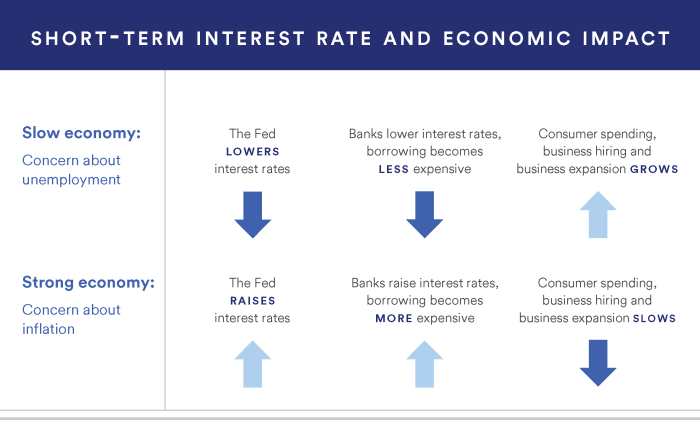
Interest rates play a crucial role in the world of investments, influencing various financial decisions and market conditions. Let’s delve into what interest rates are, how they are determined, the types that impact investments, and their relationship with the economy.
What are Interest Rates and How are They Determined?
Interest rates represent the cost of borrowing money or the return on investment for lenders. They are influenced by factors such as inflation, monetary policy set by central banks, and market demand. The central bank of a country typically sets the benchmark interest rate, which serves as a reference point for other rates in the economy.
Types of Interest Rates Impacting Investments
- Prime Rate: The rate offered by banks to their most creditworthy customers, influencing various loan products and credit cards.
- Fixed Interest Rates: Rates that remain constant throughout the term of a loan or investment, providing predictability for investors.
- Variable Interest Rates: Rates that can fluctuate based on changes in the market or benchmark rates, affecting the returns on investments.
- Bond Yields: The interest rates on bonds, which impact the pricing and attractiveness of these fixed-income securities.
Relationship Between Interest Rates and the Economy
Interest rates have a significant impact on economic activity, influencing borrowing, spending, and investment decisions. When rates are low, borrowing becomes cheaper, stimulating consumer spending and business investment. Conversely, high-interest rates can discourage borrowing and lead to reduced economic growth. Central banks often adjust interest rates to manage inflation, employment levels, and overall economic stability.
HOW INTEREST RATES IMPACT INVESTMENTS
Changes in interest rates can have a significant impact on various types of investments, affecting stock market performance, bond prices, and real estate investments.
Stock Market Performance
When interest rates rise, borrowing becomes more expensive for companies, leading to higher costs of doing business. This can result in lower corporate profits and potentially lower stock prices as investors reevaluate the risk-return profile of equities.
Bond Prices
Interest rate fluctuations have an inverse relationship with bond prices. When interest rates rise, newly issued bonds come with higher yields, making existing bonds with lower yields less attractive. As a result, the prices of existing bonds decrease to align with the higher yields of new bonds.
Real Estate Investments
Interest rates play a crucial role in the real estate market. When interest rates are low, borrowing costs are reduced, making it more affordable for individuals to finance real estate purchases. On the other hand, rising interest rates can lead to higher mortgage rates, decreasing the demand for real estate and potentially affecting property values.
INVESTMENT STRATEGIES DURING RATE CHANGES: How Interest Rates Impact Investments
When interest rates are on the rise, investors need to adjust their strategies to optimize their returns and minimize risks. Here are some examples of investment strategies that are suitable during high-interest rate environments:
Investment Strategies for High-Interest Rate Environments, How interest rates impact investments
- Diversification: Allocating funds across different asset classes can help mitigate the impact of rising rates on a single investment.
- Focus on Short-term Investments: Short-term bonds or certificates of deposit (CDs) can provide higher yields without locking in funds for an extended period.
- Inflation-Protected Securities: Investing in Treasury Inflation-Protected Securities (TIPS) can help safeguard against inflation during high-interest rate periods.
- Dividend Stocks: Companies with a history of stable dividend payments can be a good option as they can provide a steady income stream even when interest rates are high.
Adjusting Portfolios during Rising Interest Rates
- Review Fixed-Income Investments: Consider adjusting the duration of bond holdings to minimize the impact of rising rates on bond prices.
- Reduce Exposure to Interest Rate Sensitive Stocks: Stocks of industries highly sensitive to interest rates, such as utilities and real estate, may underperform during rate hikes.
- Consider Floating Rate Investments: Floating rate bonds or loans can provide a hedge against rising interest rates as their coupon rates adjust with market rates.
Impact of Interest Rate Cuts on Investment Decisions
- Boost in Stock Market: Interest rate cuts tend to stimulate economic activity, leading to a potential increase in stock prices.
- Refinance Opportunities: Lower interest rates may present opportunities for refinancing mortgages or other loans to lower monthly payments.
- Rebalancing Portfolios: Investors may need to reassess their asset allocation to capitalize on the changing interest rate environment.
In conclusion, the impact of interest rates on investments is a critical factor that investors must carefully consider in their financial decisions. By understanding how interest rates influence different asset classes and investment vehicles, individuals can make more informed choices to optimize their portfolios and achieve their financial goals.
FAQ Summary
How do interest rates affect stock market performance?
Changes in interest rates can impact stock market performance by influencing borrowing costs, corporate earnings, and investor sentiment.
What are some investment strategies suitable during high-interest rate environments?
During high-interest rate environments, investors may consider allocating funds to fixed-income securities, dividend-paying stocks, or real estate investments.
How can investors adjust their portfolios during periods of rising interest rates?
Investors can adjust their portfolios during rising interest rates by diversifying their investments, focusing on short-term bonds, and considering alternative investment options.
What is the impact of interest rate cuts on investment decisions?
Interest rate cuts can lead to lower borrowing costs, potentially boosting economic growth and stimulating investment activity in certain sectors.


