
Mortgage interest rates forecast sets the stage for understanding the complex interplay of factors influencing these rates. Delving into historical trends and economic indicators, this topic sheds light on the art of predicting future mortgage interest rates.
Mortgage Interest Rates Forecast
When it comes to predicting mortgage interest rates, several key factors play a crucial role in influencing the direction they may take. These factors can range from economic indicators to global events that impact the financial markets.
Factors Influencing Mortgage Interest Rates
- The Federal Reserve: The actions and decisions made by the Federal Reserve, particularly regarding monetary policy, can have a direct impact on mortgage interest rates. For example, when the Fed raises interest rates, mortgage rates tend to follow suit.
- Economic Indicators: Indicators such as inflation rates, employment numbers, and GDP growth can provide valuable insights into the overall health of the economy. Strong economic data may lead to higher mortgage rates, while weaker data could result in lower rates.
- Market Conditions: Supply and demand dynamics in the housing market, as well as investor sentiment, can also influence mortgage interest rates. For instance, during times of high demand for homes, rates may increase.
Historical Trends of Mortgage Interest Rates
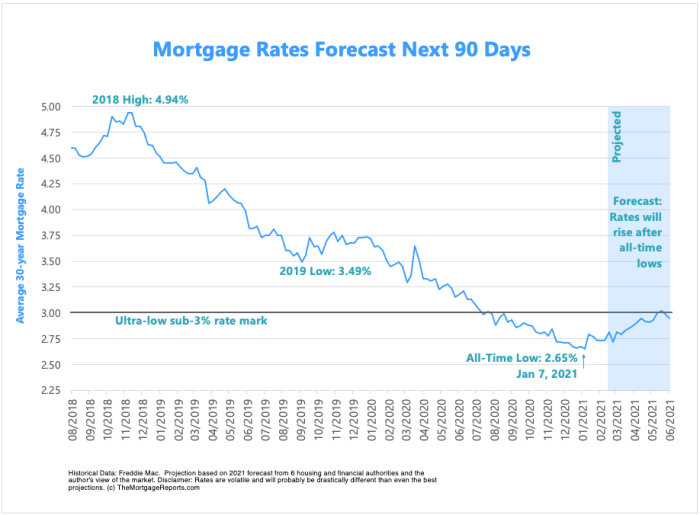
Looking back at historical trends can often provide a useful guide for forecasting future mortgage interest rates. For example, data from past decades may reveal patterns in how rates have reacted to specific economic events or policy changes.
Impact of Economic Indicators on Predicting Future Rates
- Employment Data: Unemployment rates and job creation figures can offer clues about the strength of the economy, which in turn can influence mortgage rates.
- Inflation Rates: Inflation erodes the purchasing power of the dollar, prompting investors to demand higher yields on mortgage-backed securities, leading to higher mortgage rates.
- Consumer Confidence: Positive consumer sentiment often correlates with a healthy economy, potentially leading to higher mortgage rates as demand for homes increases.
Interest Rates
Interest rates refer to the percentage charged by lenders to borrowers for the use of their money. They play a crucial role in determining the cost of borrowing and the return on savings or investments. Interest rates are influenced by various factors such as inflation, economic conditions, and central bank policies.
Fixed Interest Rates vs. Adjustable Interest Rates, Mortgage interest rates forecast
Fixed interest rates remain constant throughout the life of the loan, providing borrowers with predictable monthly payments. On the other hand, adjustable interest rates fluctuate based on market conditions, potentially resulting in lower initial rates but higher payments later on. Borrowers must weigh the stability of fixed rates against the flexibility of adjustable rates when choosing a mortgage.
Impact of Interest Rate Changes on Borrowing Costs
Changes in interest rates directly impact borrowing costs for mortgages. When interest rates rise, the cost of borrowing increases, leading to higher monthly payments for borrowers. Conversely, when interest rates fall, borrowers may benefit from lower monthly payments. It is essential for borrowers to consider potential interest rate changes when planning for their mortgage payments to ensure financial stability.
In conclusion, the discussion on Mortgage interest rates forecast reveals the intricate dynamics at play in determining mortgage interest rates, offering valuable insights into what the future might hold in this realm.
Question Bank: Mortgage Interest Rates Forecast
What are some key factors influencing mortgage interest rates?
Factors such as inflation, economic growth, and the Federal Reserve’s monetary policy play a significant role in determining mortgage interest rates.
How do fixed interest rates differ from adjustable interest rates?
Fixed interest rates remain constant throughout the loan term, providing predictability, while adjustable rates can fluctuate based on market conditions.
What impact do changes in interest rates have on borrowing costs for mortgages?
Changes in interest rates directly affect the cost of borrowing for mortgages, influencing monthly payments and overall affordability.


